
Finding Tupelo Residents
Tupelo serves as the Lee County seat, yet no single record lists every resident. The Tax Assessor ties a parcel to its listed owner and addresses. The Chancery Clerk records land instruments. The Circuit Clerk and the Mississippi Secretary of State handle election records. These trails differ, and so do their limits. Start with the source that fits the question. Then move from a name to a parcel, or from an address to a legal description. A deed party may own the land without living on it. A tax mailing address may belong to an agent or a post-office box.
Older households call for a different route. Step from a current property record into a directory, newspaper, census, or probate file. Test dates, middle initials, and relationships against a second independent custodian. A named-street investigation fits the street records route better.
- Search the Lee County property route by owner or address, then preserve the situs address, mailing address, parcel or PPIN, and legal description separately.
- Use the recorded-instrument index for a grantor, grantee, parcel, or legal-description check. Treat the courthouse index as the authoritative index.
- Use the Mississippi voter verifier only for its permitted matching purpose, and do not retain sensitive match keys.
- For a past household, compare the relevant directory year with census, newspaper, deed, or probate material.
- When no online index covers the record, ask the custodian for inspection or make a narrow Mississippi Public Records Act request.
Tupelo Resident Records Offices
Lee County splits its useful records across several offices. It does not pool them in one place. The Chancery Clerk keeps deeds, liens, UCC filings, chancery files, and tax-sale material. The Tax Assessor maintains the appraisal and parcel route. The Circuit Clerk handles marriage licenses, elections, voter registration, and circuit-court duties. Each office can confirm its own record. It can also explain its copy process and say whether an older volume or terminal is required. The public counter still matters in some cases. Online services may post no start year or offer no name-search form.
Lee County Chancery Clerk
PO Box 7127
Tupelo, MS 38802
662-432-2100
Lee County Tax Assessor
Lee County appraisal and parcel route
Tupelo, MS
662-432-2700
Lee County Circuit Clerk
200 W Jefferson St
Tupelo, MS 38804
662-432-2300
Tupelo Deed Index Warning
The Lee County Records Portal, known as CRMS, makes instrument searching convenient, but the portal itself states that the courthouse land-record index is official. Its search covers names, dates, instrument number or type, book and page, parcel, address, PPIN, legal description, subdivision, lot, block, section, township, and range. That range of options helps you move between a person and a property record. It cannot turn a transaction entry into proof of current residence. The CRMS landing page displays the search entry points on the official site.
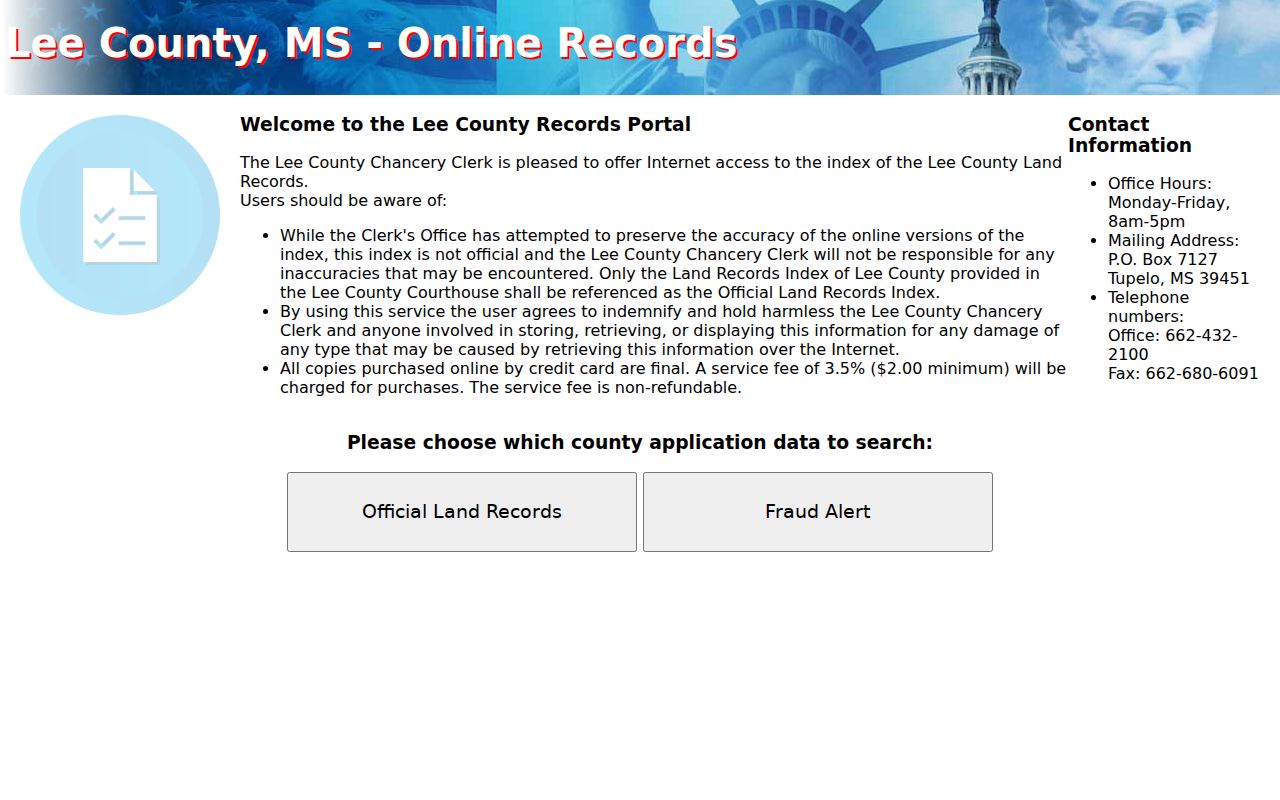
Treat the displayed warning as a cue. Confirm older books, copies, and contested index details at the Chancery Clerk. The portal publishes no start year for its online index.
- Parcel or PPIN
- A property identifier that helps bridge the assessor, map, and deed systems.
- Legal description
- The recorded land identity, such as a lot and block or a metes-and-bounds description.
- Grantor and grantee
- The party transferring an interest and the party receiving it in a recorded instrument.
- Index
- A finding aid that points to a record. It is not always the record image or a certified copy.
Tupelo Property Roll Clues
Lee County hosts its property search through Delta Computer Systems. County mapping is linked through Tri-State Consulting. The landing page lays out the appraisal route. It does not show every live search control. Confirm exact fields with the Assessor instead of assuming a particular filter exists. A property record can show a listed owner, situs address, mailing address, value, exemption signals, and parcel data where returned. Keep the two addresses distinct. A situs address marks the parcel location. A mailing address is where the tax notice goes.
| Assessor field or result | What the research establishes |
|---|---|
| Owner or name | A listed owner is a search dimension or expected result, not a full household list. |
| Situs or property address | The physical parcel location should be checked against the parcel and legal description. |
| Mailing address | An expected result field for tax correspondence, which may differ from the parcel. |
| Parcel or PPIN | The bridging key for GIS, deed, and tax records; the exact visible label needs live confirmation. |
| Value, class, or exemption | Tax-year-specific data and owner-occupancy signals, not proof of a household or identity. |
A block-wide address question needs the Tupelo streets directory workflow. One parcel card is not a roster of everyone living nearby.
Tupelo Voter Verification Limits
Mississippi's Are You Registered to Vote? tool asks for county, first name, last name, last four Social Security digits, and date of birth. Together those details check a matching registration. The public voter-file route works differently. Under the applicable request rules, it can include public address, precinct, district, registration date, status, and voting-history fields. Sensitive identifiers stay excluded. A registration match is not a household census. It should not be used to draw conclusions about people absent from it. The official page shows the verification fields rather than a broad people list.
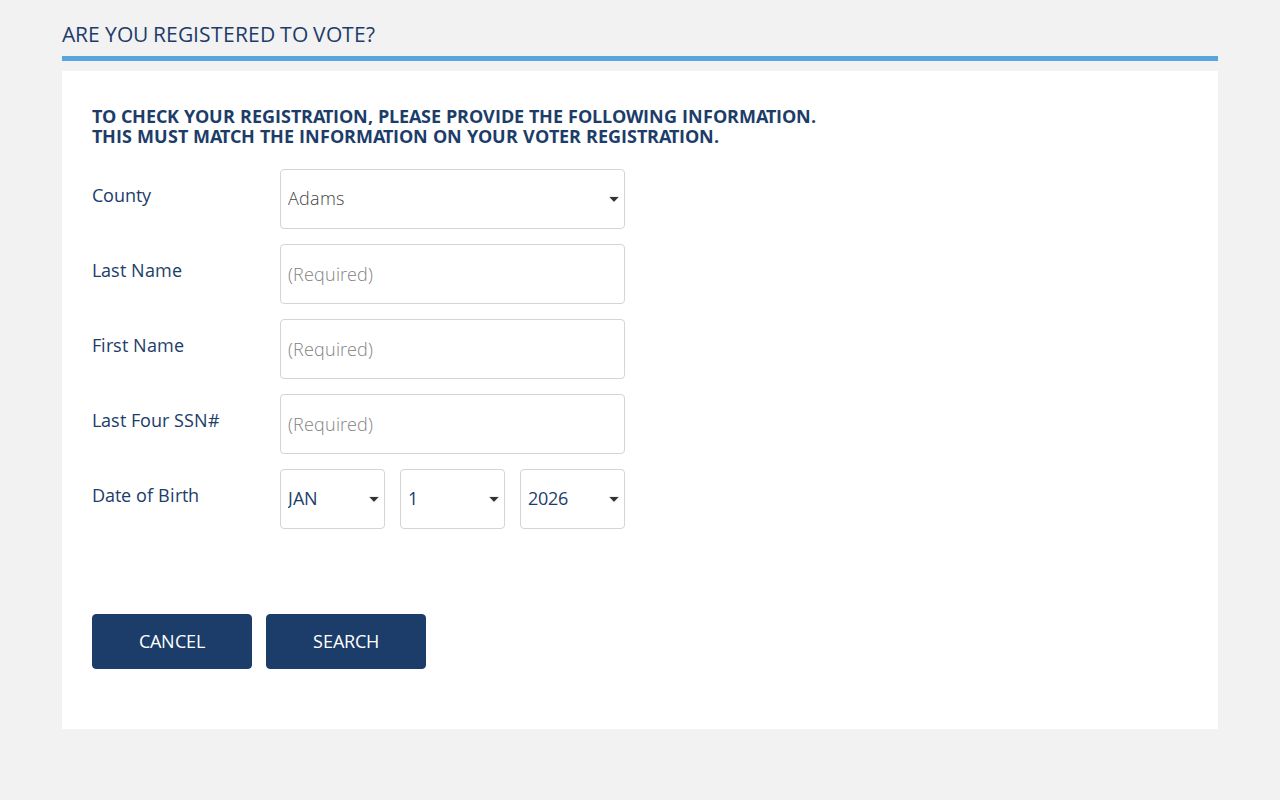
For an address and polling-place question, the Secretary of State's My Election Day route starts with ZIP code, residential address, and CAPTCHA. Verify a local result with the Circuit Clerk.
Note: A voter record can change after address review, so status and date matter as much as a name match.
Current Tupelo Resident Sources
Current Tupelo resident sources really form a set of record types. The strongest official answer depends on the question. It may be a listed owner, a registration match, a recorded transaction, a public case, or a state license. Each source establishes some facts and not others. A library collection can preserve a past address. But it cannot confirm today's address. A business filing shows a filed role without establishing a personal residence. Match the record type to the question before drawing a conclusion.
| Tupelo source | Useful signal | Custodian | Access route |
|---|---|---|---|
| Property roll | Listed owner, parcel, situs and mailing clues | Lee County Tax Assessor | Delta landing page and Assessor office |
| Recorded instruments | Parties, legal description, dates, book/page | Chancery Clerk | CRMS, then courthouse index |
| Registration record | Matching status and election context | SOS and Circuit Clerk | Verifier or lawful file request |
| Public docket | Party role, case number, dates, and disposition if public | Municipal or county court clerk | PDFs, clerk, MEC/PAMEC where available |
| Library and archive material | Older household, newspaper, map, or family context | Library and MDAH | Catalog, microfilm, digital collection, staff help |
A missing online hit is not proof that no record exists. Use the custodian named in the last column whenever a portal comes up empty.
Tupelo Public-Records Requests
Records that never made it online still belong to the office that created them. The Mississippi Public Records Act, Miss. Code Ann. §§25-61-1 through 25-61-17, governs. A good request names the record type, the name or address, a date range, and a format. Ask to inspect first. Ask for a cost estimate before ordering copies. Expect protected portions to be redacted or separated. The act does not open every custody, vital, juvenile, or protected-address record.
The Mississippi Ethics Commission’s Public Records Act page is the statutory starting point. A body with an adopted procedure has seven working days to respond. Without one, the limit is a single working day. Production generally follows within 14 working days. An agreement or the record’s nature may justify more time. MDAH also offers local-government guidance on timing and fees. Tupelo requesters working through county offices can consult it.
Tupelo Court and Vital Boundaries
Court and vital records each sit with their own custodian. Tupelo Municipal Court posts docket PDFs but offers no public name-search box. Lee Justice, Circuit, and Chancery matters may need a clerk inquiry. Participating electronic court material runs through MEC/PAMEC. A caption alone says nothing about the outcome. Youth, sealed, expunged, adoption, and protected filings carry separate limits. Federal cases fall in the Northern District of Mississippi’s Aberdeen Division.
Certified birth, death, and marriage copies come from the Mississippi State Department of Health. They are subject to eligibility, identification, fees, and confidentiality. Birth records stay restricted for 100 years. Death records stay restricted for 50 years. The Lee Circuit Clerk handles local marriage licenses. Divorce decrees sit with the Chancery Clerk rather than MSDH. The MSDH vital-records information spells out the certified-copy route.
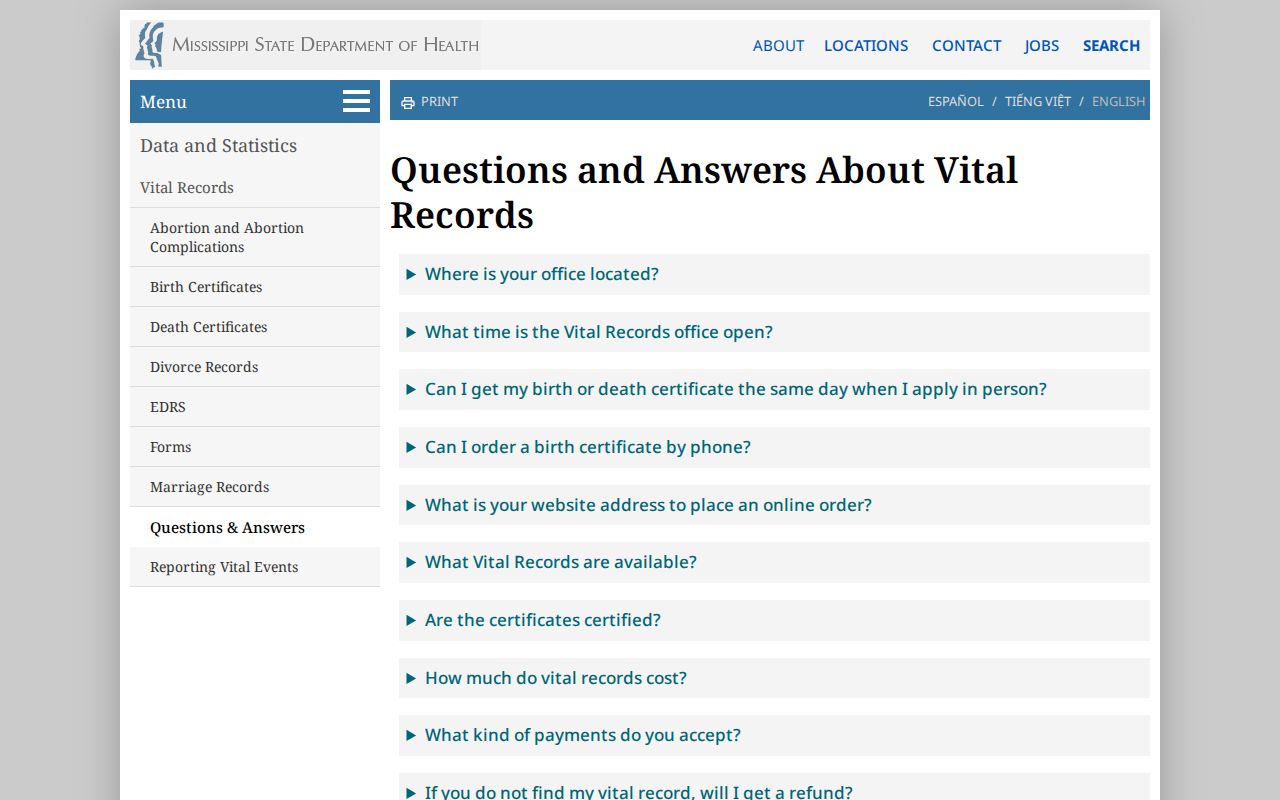
Read the application instructions before paying for a copy. A generic public-records request is not the route for a vital certificate from the state.
Tupelo Library and Archive Routes
The Helen Foster Purvis Mississippi Room at Lee County Library is a natural first stop for Tupelo history. Its noncirculating holdings include books, microfilm, maps, scrapbooks, digital files, photographs, audio, and video, along with family histories, city and county history, and cemetery resources. It publishes no year-by-year directory or obituary inventory. Ask staff for an exact reel, call number, directory year, telephone-book run, obituary index, or yearbook before assuming an item exists.
For deeper history, MDAH Quick Searches, its county-records catalog, and the digitized Lee County tax series reach land and personal-property items from 1868 through the listed 1888 material.
Tupelo Public-Safety Record Limits
Custody and registry sources answer narrow public-safety questions, not ordinary directory questions. The Lee County Sheriff links an inmate-search page whose roster is embedded from another service. Mississippi DOC searches by first name, last name, or MDOC ID. It offers inmate or parolee modes. State custody is separate from a county jail record. Details can change, and a missing hit proves nothing about a person’s status. The Mississippi DOC locator shows its available search route.

The Lee County inmate-search page is a separate local route.

The Mississippi Sex Offender Registry offers name, geographic, and community-notification modes, each with its own legal-use warning.
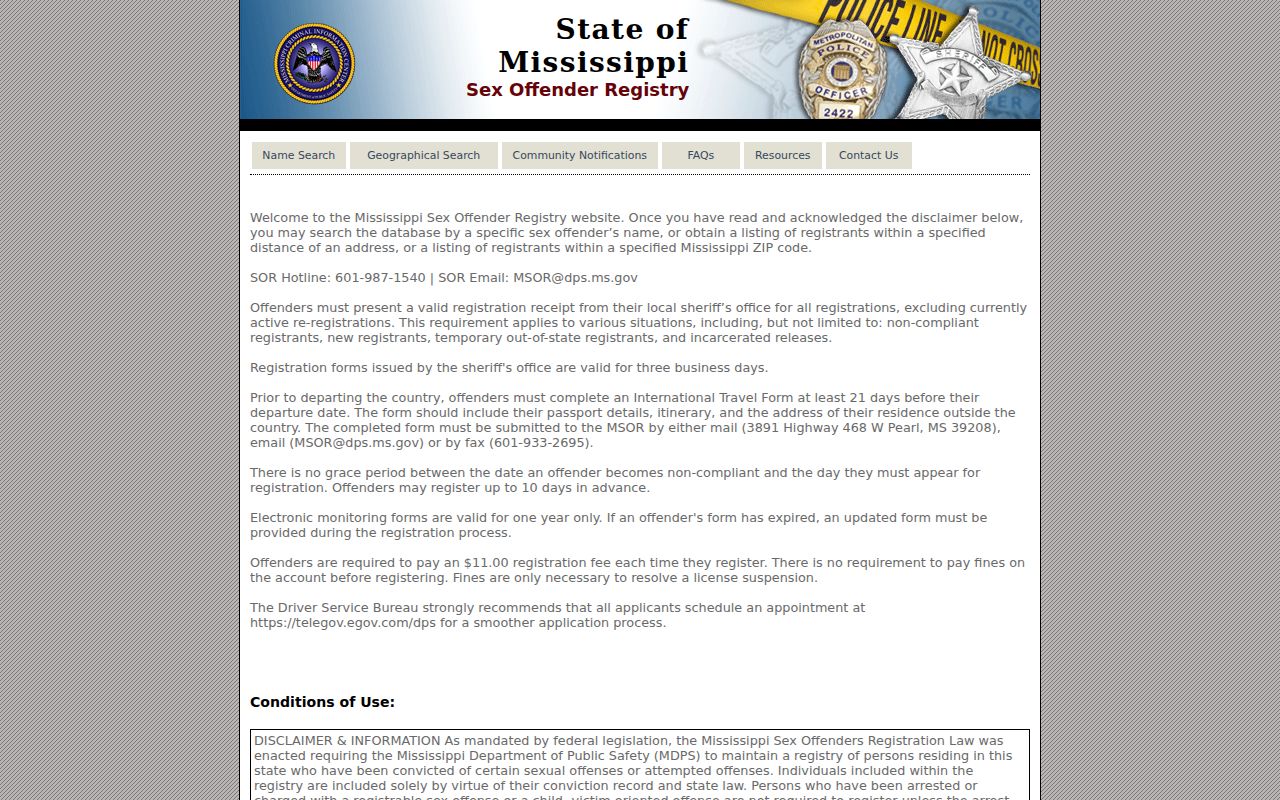
For notification rather than a public search, Mississippi SAVIN/VINE is the state route. Read results carefully. Never infer an outcome from a booking, a charge, or a partial record.
Tupelo Courthouse Fires and Gaps
Tupelo’s record trail carries a local caution. City historic guidelines document a Lee County courthouse fire in 1873. A replacement courthouse followed in 1874. Another fire struck in 1902, and a replacement came in 1904. Which deed, marriage, probate, or court books were destroyed, copied, or reconstructed is not documented. Neither fire proves that a particular record vanished.
Treat the fires as a reason to widen the search instead. Compare the Chancery Clerk’s books with MDAH microfilm. Add tax material, newspapers, library collections, and later abstracts. The April 5, 1936 tornado also explains why a building may have been replaced. It does not prove a personal record loss. For older Tupelo or East Tupelo work, keep the historical place label alongside the parcel, address, and map year so the record stays traceable. That way the record stays easy to follow.
Tupelo Corrections and Safe Use
Different custodians correct different facts. Take a parcel or assessor mismatch to the Tax Assessor. Take a deed-index concern to the Chancery Clerk. Take a registration issue to the Circuit Clerk or Secretary of State. Take a license concern to the issuing board. Bring the record, instrument, case, or license number with documentary support. Keep a dated copy of the request. Keep the official response too, rather than editing a saved result with no source trail.
Some omissions are deliberate. Mississippi’s Address Confidentiality Program can substitute a mailing route for eligible protected residents. Voter, vital, youth-court, adoption, and sealed-court material all carry limits. A protected or missing result is not evidence of anything. It does not prove that a person does not live in Tupelo. Use only what a public record actually says. Avoid publishing sensitive identifiers or a list of private people.
| Official record route | Compiled search category |
|---|---|
| Names its custodian, record type, access rules, and correction route. | May combine old filings and marketing data with uneven update dates. |
| Lets a reader confirm an instrument, parcel, docket, or collection at the source. | Can confuse people with the same name or keep an address after the official record changes. |
| Shows the limits of a particular record instead of implying a complete personal profile. | Should never be treated as proof of identity, present residence, or a household relationship. |
Historical Tupelo Resident Sources
Old Tupelo city directories survive only in patches. The St. Louis County Library holds microfilm covering 1940 through 1960. The University of Southern Mississippi guide adds Tupelo holdings for 1963 and 1965. That leaves real gaps, so treat the trail as partial rather than complete. A Polk-style volume typically opens with front-matter abbreviations, then alphabetical name entries, then a numerical street or householder section, and sometimes reverse telephone listings. Read the front matter first. Note the publication year and page number before trusting any entry as evidence.
Tupelo Tornado and East Tupelo Labels
Historical records carry their own local geography. City preservation material records that a tornado destroyed much of Tupelo on April 5, 1936. That single fact can explain a replacement structure. Pair it with a Sanborn sheet, a newspaper item, a later deed, or a permit record. It proves nothing about any named resident's own record being lost. Labels shift too. Older material may say East Tupelo. Today's postal, city, and county systems use a different name or boundary.